Blog

  • How to Start a Business in UK as a Foreigner: The Easy Way

    How to Start a Business in UK as a Foreigner: The Easy Way

    So, you’ve got a killer idea, a laptop, and a dream to expand your empire across the pond. But there’s a tiny catch: you aren’t a British citizen. Can you still pull this off? Absolutely! In fact, many successful entrepreneurs looking to start a business in UK as a foreigner find that the process is surprisingly straightforward compared to other countries.

    The United Kingdom is one of the top global hubs for business, offering access to European markets (even post-Brexit), a robust legal system, and a vibrant startup culture. If you are wondering how to navigate the red tape without getting a headache, you have come to the right place. Let’s break down exactly how you can start a business in UK as a foreigner without getting lost in jargon.

    Can You Really Start a Business in UK as a Foreigner?

    First things first: Yes, you can! You do not need to be a UK resident or citizen to register a company in the UK. The British government is actually quite keen on foreign investment.

    However, there is a distinction you need to understand. Being a director or shareholder of a UK company is different from actually working in the UK. You can own a UK company while living in Bali or New York, but if you want to move to London to run the day-to-day operations, immigration rules will apply.

    Step 1: Sorting Out the Visa Situation

    If your plan is to manage everything remotely, you can skip this part. But if you intend to physically move to Britain to start a business in UK as a foreigner, you will likely need a visa. Here are the most common options:

    • Innovator Founder Visa: This is for experienced business people with a unique, innovative, and scalable business idea approved by an endorsing body.

    • Global Talent Visa: If you are a leader in digital technology, arts, or science, this might be your golden ticket.

    • Self-Sponsorship: A more complex route where you set up a UK company (with a UK resident director) which then sponsors your visa.

    Step 2: Choosing the Right Business Structure

    When you decide to start a business in UK as a foreigner, you generally have two main options, but only one usually makes sense for non-residents:

    1. Sole Trader: This binds the business to you personally. It is tough to set up if you don’t live in the UK because of tax registration requirements.
    2. Private Limited Company (LTD): This is the winner. It is a separate legal entity from you. It protects your personal assets, looks more professional, and crucially, allows foreign directors and shareholders.

    A photorealistic image of a diverse young entrepreneur smiling while working on a laptop in a modern coffee shop with a view of the London skyline, including the Shard and Big Ben, through the window. Warm lighting, professional yet casual atmosphere, showing business planning documents on the table.

    Step 3: The Registration Process

    Ready to make it official? To start a business in UK as a foreigner, you will need to register with Companies House. Here is what you need:

    • A Company Name: It must be unique and not contain restricted words.

    • A UK Registered Office Address: This is mandatory. Since you are abroad, you can’t use your home address. Luckily, there are plenty of service providers who offer virtual office addresses in London or other major cities for a small annual fee.

    • Directors and Shareholders: You need at least one director and one shareholder (this can be the same person—you!).

    Step 4: Banking and Taxes

    This is often the trickiest part when you start a business in UK as a foreigner. Traditional high-street banks (like Barclays or HSBC) often require the director to be physically present in the UK to open an account.

    The Solution: Fintech.

    Digital banking platforms like Wise (formerly TransferWise), Revolut Business, or Tide are lifesavers. They allow you to set up a UK business bank account remotely, which you will need to pay suppliers and receive payments.

    Regarding taxes, your company will need to pay Corporation Tax on profits. Even if you live abroad, your UK company is tax-resident in the UK. Make sure you hire a UK-based accountant to handle your filings—it is worth every penny to avoid fines.

    Final Thoughts

    Taking the leap to start a business in UK as a foreigner is an exciting move. The barriers to entry are low, the prestige is high, and the digital infrastructure makes it easier than ever to run a British company from anywhere in the world. Just ensure you get your registered address sorted and choose the right banking partner, and you will be trading in no time!

  • How to Open a Company in UK as an Expat: A Simple Guide

    How to Open a Company in UK as an Expat: A Simple Guide

    So, you’ve got a brilliant business idea and you’ve got your sights set on the British market. That is awesome! The UK is one of the best places in the world to start a business thanks to its robust economy and relatively straightforward bureaucracy. But if you aren’t a local, the process might feel a bit daunting. You might be asking yourself, “How to open a company in UK as an expat without getting lost in paperwork?”

    Don’t panic. It is actually much easier than you might think. Whether you are already living in London or planning your move from overseas, this guide is going to walk you through exactly how to open a company in UK as an expat. Let’s dive in and turn that entrepreneurial dream into a reality.

    Can Expats Actually Start a Business in the UK?

    The short answer? Absolutely! You do not need to be a UK citizen or even a permanent resident to register a company in the UK. The British government is pretty open to foreign investment and entrepreneurship. However, while forming the company is easy, living and working there to run it is where visa rules kick in (we will get to that in a bit).

    If you are strictly looking at the logistics of how to open a company in UK as an expat, the requirements are quite minimal. You need at least one director and one shareholder (who can be the same person), and a registered UK address.

    Step-by-Step: How to Open a Company in UK as an Expat

    Ready to get official? Here is the breakdown of what you need to do to get your Limited Company (Ltd) up and running.

    1. Choose a Unique Name

    Your business name can’t be the same as (or too similar to) an existing one. You can use the Companies House name availability checker to see if your idea is taken. Also, avoid offensive words or sensitive terms unless you have permission.

    2. Get a Registered Office Address

    This is non-negotiable. You need a physical address in the UK where official mail can be sent. It cannot be a PO Box. If you don’t have an office yet, don’t worry! Many accountants and formation agents offer a “registered office service” for a small annual fee.

    3. Appoint Directors and Shareholders

    As mentioned earlier, you need at least one of each. You can be the sole director and hold 100% of the shares. You will need to provide personal details, but for security, you can use a service address to keep your home address off the public register.

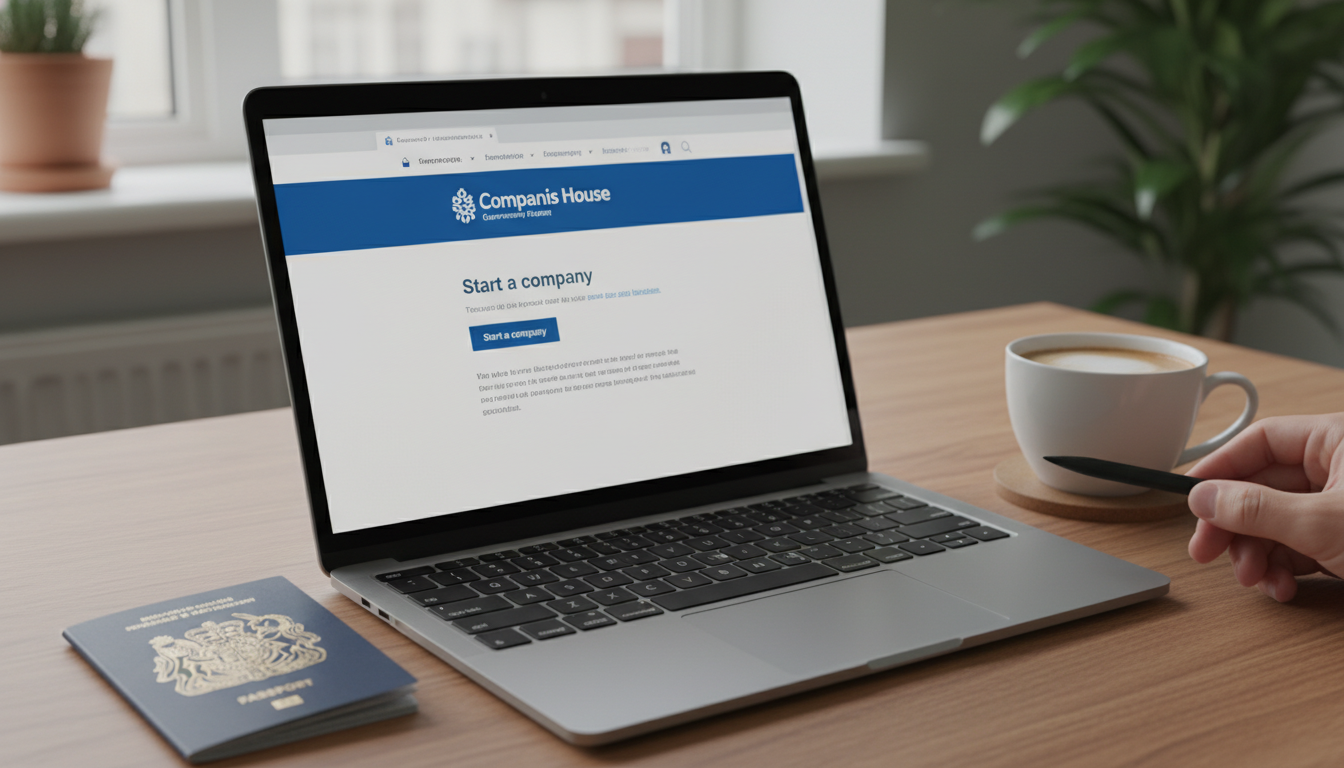
    A close-up, photorealistic shot of a modern desk with a laptop displaying the UK Companies House website, a passport, and a cup of coffee, symbolizing an expat starting a digital registration process.

    4. Assign a SIC Code

    This sounds technical, but it’s just a code that describes what your business does (e.g., “62020 – Information technology consultancy activities”). You will select this from a list during registration.

    5. Register with Companies House

    The actual registration process is usually done online. It costs a very small fee (often under £15) and can be approved in as little as 24 hours. Once approved, you will get a Certificate of Incorporation. Congratulations, your company officially exists!

    The Tricky Part: Visas and Banking

    Knowing how to open a company in UK as an expat involves more than just registration; it involves logistics.

    Sorting Out Your Visa

    If you plan to live in the UK to run your business, you cannot just hop on a tourist plane. You will likely need a visa. The most common routes include:

    • Innovator Founder Visa: For those with a unique business idea endorsed by an approved body.
    • Global Talent Visa: For leaders in digital technology, arts, or science.
    • Skilled Worker Visa: If you are being “employed” by your own company (though this has complex sponsorship rules).

    Opening a Business Bank Account

    Ironically, registering the company is easy, but opening a high-street bank account as a non-resident director can be a headache due to anti-money laundering laws.

    Pro Tip: Look into digital challenger banks (fintechs) like Wise, Revolut Business, or Starling. They are often much more expat-friendly and allow you to set up accounts online much faster than traditional banks.

    Taxes and Staying Compliant

    Once you have figured out how to open a company in UK as an expat, you need to stay on the right side of HMRC (Her Majesty’s Revenue and Customs).

    • Corporation Tax: You must register for this within three months of starting business activity.

    • VAT: If your annual turnover exceeds £90,000 (check current rates), you must register for VAT.

    • Confirmation Statement: You need to file this once a year to confirm your company details are up to date.

    Final Thoughts

    Starting a business abroad is a big step, but the UK makes it surprisingly accessible. By following these steps on how to open a company in UK as an expat, you are setting yourself up for success in one of the world’s most dynamic markets. Just take it one step at a time, get your registered address sorted, and consider using a formation agent if you want to skip the admin headache. Good luck!

  • Starting Up? Unlocking the Best Business Opportunities in UK for Expats

    Starting Up? Unlocking the Best Business Opportunities in UK for Expats

    So, you are thinking about packing your bags and heading to the British Isles? Awesome choice! Beyond the fish and chips and the royal history, the United Kingdom is a powerhouse for innovation. For those looking to be their own boss, there are incredible business opportunities in UK for expats right now. Whether you are a tech wizard or a culinary artist, the UK market is surprisingly welcoming to international talent.

    Let’s be honest, navigating a new country’s economy can feel a bit daunting at first. But don’t worry, we’ve done the heavy lifting for you. In this guide, we will walk through the hottest sectors and tips to get you started.

    Why the UK is a Hotspot for Expat Entrepreneurs

    Before we dive into specific ideas, let’s talk about why you should even consider it. The UK ranks highly for ease of doing business. With a time zone that bridges the gap between the US and Asia, and a legal system that is transparent, it provides a solid foundation. Plus, the government actively encourages business opportunities in UK for expats through various visa schemes like the Innovator Founder visa.

    1. Technology and FinTech

    If you have a background in coding or finance, London is basically calling your name. As the FinTech capital of Europe, there is an insatiable demand for new solutions in banking, cybersecurity, and payment processing. You don’t have to compete with the giants; niche SaaS (Software as a Service) products solving specific UK compliance or efficiency problems are thriving.

    2. E-commerce and Drop-shipping

    The British love to shop online. In fact, the UK has one of the highest percentages of online retail sales in the world. This creates massive business opportunities in UK for expats who understand digital marketing.

    • Niche Products: Think eco-friendly home goods or personalized gifts.

    • Subscription Boxes: From gourmet coffee to pet treats, the subscription model is booming here.

    A photorealistic image of a modern, diverse team of young entrepreneurs working collaboratively in a stylish, brick-walled London co-working space with large windows overlooking the city skyline, sunlight streaming in, laptops and coffee cups on the table.

    3. Green Energy and Sustainability Consultants

    The UK has set ambitious targets to reach net-zero carbon emissions. This shift has opened up a treasure trove of opportunities. If you have expertise in renewable energy, waste management, or sustainable building, your skills are in high demand. Companies are desperately looking for consultants to help them go green to meet new regulations.

    4. Food and Beverage (With a Twist)

    The UK food scene has exploded in the last decade. It’s no longer just pies and mash. There is a huge appetite for authentic international cuisine. Expats have a unique advantage here—bringing authentic flavors from home. Street food stalls and pop-up restaurants are great, low-risk ways to test business opportunities in UK for expats before committing to a brick-and-mortar location.

    Getting Started: The Boring (But Important) Stuff

    Okay, you have the idea, but how do you make it official?

    1. Visa Check: Ensure your visa allows self-employment.
    2. Companies House: Registering your company is surprisingly fast and cheap online.
    3. Taxes: Get familiar with HMRC (Her Majesty’s Revenue and Customs). You might want to hire a local accountant to handle the VAT and Corporation Tax specifics.

    Final Thoughts

    Taking the leap is scary, but the rewards can be massive. The ecosystem is supportive, the market is diverse, and the business opportunities in UK for expats are growing every year. So, grab a cuppa, finalize that business plan, and get ready to make your mark in the UK!

  • How to Register a Business in UK as a Non-Resident: A Simple Guide

    How to Register a Business in UK as a Non-Resident: A Simple Guide

    So, you’ve got a killer business idea, and you’re looking to go global. That is awesome! One of the best moves you can make is to register a business in UK as a non-resident. Why? Because the UK has a fantastic reputation, a solid legal system, and, believe it or not, it is incredibly easy to set up a company there—even if you live thousands of miles away.\n\nIn this guide, we are going to break down exactly how you can set up your Limited (LTD) company without getting a headache. We will keep it casual, simple, and straight to the point.\n\n## Why Bother with a UK Company?\n\nBefore we dive into the “how-to,” let’s quickly chat about the “why.” Choosing to register a business in UK as a non-resident comes with some pretty sweet perks:\n\n Credibility: Having a UK-registered company makes you look professional and trustworthy to clients worldwide.\n Low Corporate Tax: Compared to many other European countries, the UK tax rates are competitive.\n Ease of Setup: You don’t need to visit the UK to do it. Everything can be done online.\n\n## Can You Really Do It From Anywhere?\n\nShort answer: Yes!\n\nLong answer: Absolutely. The UK government wants foreign investment. You do not need to be a UK citizen, and you do not need to live in the UK. You just need to be at least 16 years old and not be an undischarged bankrupt. That’s pretty much it.\n\n## Step-by-Step: Register a Business in UK as a Non-Resident\n\nReady to get started? Here is your roadmap. The process is handled through Companies House, the official registrar of companies in the UK.\n\n### 1. Pick a Unique Name\n\nFirst things first, you need a name. It has to be unique and cannot be “too similar” to an existing one. You can use the Companies House name availability checker to see if your dream name is free. Keep it professional, but don’t be afraid to be creative!\n\n### 2. Get a Registered Office Address\n\nThis is the part that confuses people when they want to register a business in UK as a non-resident. Since you don’t live there, what address do you use?\n\nBy law, your company must have a registered office address in the UK (England, Wales, Scotland, or Northern Ireland). This address will be public record. Since you are overseas, you can’t use your home address.\n\nThe Solution: Use a Company Formation Agent or a Virtual Office service. For a small annual fee, they will lend you their London (or other UK city) address and scan/email any official mail to you. It’s cheap, efficient, and keeps your private life private.\n\n

    A photorealistic, high-quality image of a modern, tidy home office desk with a laptop open showing a digital map of the United Kingdom, a passport lying next to it, and a cup of coffee, bathed in warm natural sunlight.

    \n\n### 3. Appoint Directors and Shareholders\n\nTo form a company, you need at least one director and one shareholder. The good news?\n\n You can be both.\n* You do not need to be a UK resident.\n\nYou will need to provide some personal details for the incorporation documents, but nothing too scary.\n\n### 4. Register with Companies House\n\nYou can do this directly on the government website, but most non-residents find it easier to use a formation agent. These agents offer packages that include the registered address (from step 2) and handle the paperwork for you.\n\nThe cost is usually very low (often between £50 to £100 for a basic package including the address). Once submitted, your company is usually approved within 24 hours.\n\n## The Banking Challenge\n\nOkay, let’s be real for a second. While it is easy to register a business in UK as a non-resident, opening a traditional high-street bank account (like Barclays or HSBC) without living there is tough. They usually require a face-to-face meeting.\n\nThe Fix: Go digital! Fintech banks like Wise (formerly TransferWise), Revolut Business, or Tide are lifesavers. They allow you to open a UK business bank account (with a sort code and account number) completely online. This is perfect for receiving payments in GBP.\n\n## Wrapping It Up\n\nSee? It’s not rocket science. Taking the leap to register a business in UK as a non-resident is a fantastic way to level up your entrepreneurial game. You get the prestige of a UK brand without the rainy weather (unless you like that sort of thing).\n\nJust remember to keep up with your annual filings and tax returns, and you are good to go. Good luck building your empire!

  • Your Easy Guide to Setting Up a Company in UK for Foreigners

    Your Easy Guide to Setting Up a Company in UK for Foreigners

    So, you’ve got a killer business idea, and you’re eyeing the United Kingdom as your launchpad? That’s a fantastic move! The UK has a massive economy, a business-friendly environment, and a reputation that screams “legitimate.” But if you aren’t a resident, you might be worried about the red tape.

    Here’s the good news: Setting up a company in UK for foreigners is actually one of the easiest business processes in the world. You don’t even need to set foot on British soil to do it. Seriously!

    In this guide, we’re going to walk you through everything you need to know to get your Limited Company (LTD) up and running without pulling your hair out. Let’s dive in.

    Can a Foreigner Really Open a UK Company?

    The short answer is: Yes, absolutely.

    The UK government wants foreign investment, so they haven’t put up many barriers. You do not need to be a UK resident or a citizen to be a director or shareholder of a UK company. You can live anywhere in the world and run your British empire from your laptop.

    However, while setting up a company in UK for foreigners is straightforward legally, there are a few logistical hoops you’ll need to jump through, which we will cover below.

    Step-by-Step: How to Register Your Business

    Ready to make it official? Here is the simple roadmap to getting your Certificate of Incorporation.

    1. Pick a Unique Name

    First things first, you need a name. It has to be unique and can’t be too similar to an existing company. You can check the availability of your desired name on the Companies House website.

    Pro tip: Keep it catchy and professional.

    2. Get a Registered Office Address

    This is the part that confuses people. Even if you live in Bali or New York, your company needs a physical address in the UK. This is where official mail from the government will be sent.

    Since you don’t live there, you can’t use your home address. The solution? Hire a formation agent or use a virtual office service. For a small annual fee, they provide a London (or other UK city) address and scan/email your official mail to you.

    A high-quality, photorealistic flat-lay of a modern wooden desk featuring a laptop displaying a digital map of the UK with business icons, a passport, a fountain pen, and a notebook titled 'Business Plan', bathed in warm natural sunlight.

    3. Appoint Directors and Shareholders

    To register, you need at least one director and one shareholder. The cool part? They can be the same person—YOU.

    • Director: The person legally responsible for running the company.

    • Shareholder: The person who owns the company.

    4. Prepare Your Documents

    You will need to prepare two main documents:

    • Memorandum of Association: A legal statement signed by all initial shareholders agreeing to form the company.
    • Articles of Association: Written rules about running the company agreed by the shareholders, directors, and the company secretary.

    If you register online (which most people do), standard templates are provided for you automatically.

    5. Register with Companies House

    This is the final step in setting up a company in UK for foreigners. You can submit your application online via Companies House. The fee is incredibly low (usually under £50 depending on how you do it), and approval is fast—often within 24 hours!

    The Tricky Part: Business Bank Accounts

    Okay, let’s be real for a second. While registering the company is a breeze, opening a traditional high-street business bank account (like Barclays or HSBC) as a non-resident is tough. They often require a face-to-face meeting in the UK and strict proof of residency.

    The Solution? Fintech.

    Most digital nomads and international entrepreneurs opt for digital banking solutions like:

    • Wise (formerly TransferWise)

    • Revolut Business

    • Payoneer

    These platforms give you UK account details (Sort Code and Account Number) so you can get paid by clients and pay your expenses seamlessly.

    Don’t Forget About Taxes!

    Just because you are abroad doesn’t mean you can ignore the taxman. Once your company is active, you must:

    1. Register for Corporation Tax: Usually done automatically when you register the company.
    2. File Annual Accounts: Even if you didn’t trade, you must file a confirmation statement.
    3. VAT: If your annual turnover exceeds £90,000, you must register for VAT.

    Final Thoughts

    Setting up a company in UK for foreigners is a brilliant strategic move to gain credibility and access new markets. The process is digital, fast, and affordable. Just make sure you sort out your registered address and pick a banking solution that works for your location.

    Ready to become a UK business owner? Start brainstorming that company name today!

  • Want to Start a Small Business in UK as an Expat? Here is Your Ultimate Guide

    Want to Start a Small Business in UK as an Expat? Here is Your Ultimate Guide

    So, you’ve moved to the land of double-decker buses, afternoon tea, and unpredictable weather. You love the vibe, but you’re itching to do something more than just sightsee or work a standard 9-to-5. You want to be your own boss. Well, you are in the right place because learning how to start a small business in UK as an expat is a fantastic journey that opens up a world of opportunities.

    The United Kingdom is known for being one of the most business-friendly countries in the world. Whether you are in bustling London, creative Bristol, or industrial Manchester, the entrepreneurial spirit is alive and well. However, navigating the legalities when you aren’t a citizen can feel a bit daunting. Don’t worry, though! We’ve broken it down into bite-sized chunks to get you up and running without a headache.

    1. Check Your Visa Status First

    Before you start printing business cards, we need to talk about the boring (but super important) stuff: legal permission. Not every visa allows you to start a small business in UK as an expat.

    If you are on a Skilled Worker Visa, you generally can’t start a business that competes with your primary employment, and there are strict rules on supplementary work. You might need to look into specific visas designed for entrepreneurs, such as:

    • Innovator Founder Visa: For those with a unique business idea endorsed by an approved body.

    • Global Talent Visa: If you are a leader in fields like digital technology, arts, or science.

    Always check the government website or consult an immigration lawyer to ensure you don’t accidentally breach your visa conditions.

    2. Choose Your Business Structure

    Once the legal right to work is sorted, you need to decide how you want to operate. In the UK, the two most common structures for small businesses are:

    Sole Trader

    This is the simplest route. You keep all your business profits after tax, but you are personally responsible for any losses your business makes. It involves less paperwork, which is great if you just want to test the waters.

    Limited Company

    This makes your business a distinct legal entity. It separates your personal finances from the business finances. While it involves more reporting and management, it can be more tax-efficient and offers liability protection.

    A photorealistic image of a diverse group of young entrepreneurs collaborating in a modern, exposed-brick co-working space in London. There is a laptop open showing graphs, a cup of tea on the table, and a view of a rainy UK street through a large window in the background. Lighting is warm and inviting.

    3. Registering Your Business

    If you decide to start a small business in UK as an expat as a Limited Company, you must register with Companies House. It costs a small fee and can be done online. You will need:

    • A suitable company name (check if it’s available first!).

    • An address for the company.

    • At least one director and one shareholder.

    • Details of the company’s shares.

    If you go the Sole Trader route, you just need to register for Self Assessment with HMRC (Her Majesty’s Revenue and Customs).

    4. Sort Out Your Banking and Taxes

    Do not mix your personal grocery money with your business funds. It’s a recipe for disaster. Open a dedicated UK business bank account. Traditional high-street banks (like HSBC, Lloyds, or Barclays) are solid, but digital banks like Monzo, Starling, or Revolut are often much faster and more expat-friendly when setting up an account.

    Understanding Taxes

    • Corporation Tax: Paid by Limited Companies on profits.
    • Income Tax: Paid on your salary or dividends.
    • VAT (Value Added Tax): You must register for VAT if your turnover exceeds £90,000 (always check the current threshold).

    5. Get Insured

    The UK culture is big on health and safety and liability. Depending on your trade, you might need Public Liability Insurance or Professional Indemnity Insurance. It builds trust with clients and protects you if things go sideways.

    Final Thoughts

    Taking the leap to start a small business in UK as an expat is brave, but totally achievable. The ecosystem is supportive, the market is diverse, and the resources are plentiful. Just take it one step at a time, keep your paperwork tidy, and maybe get yourself a good accountant. Good luck, mate!

  • How Expats Can Start a Business in UK: A Casual Guide to Success

    How Expats Can Start a Business in UK: A Casual Guide to Success

    How Expats Can Start a Business in UK: Your Roadmap to Entrepreneurship

    So, you’ve landed in the land of tea, crumpets, and unpredictable weather, and you’ve got a killer idea. Maybe you want to open a trendy coffee shop in Shoreditch or launch a tech startup in Manchester. Whatever your dream, you’re likely asking the big question: how expats can start a business in UK markets without getting bogged down in red tape?

    The good news is that the UK is actually one of the easiest places in the world to set up shop, even if you weren’t born there. The government encourages entrepreneurship, and the process is surprisingly digital. But before you print those business cards, there are a few hoops to jump through. Let’s break down exactly how expats can start a business in UK territories step-by-step.

    1. Check Your Visa Status (The Boring but Crucial Part)

    Before you do anything, you need to make sure you’re legally allowed to work for yourself. Not all visas allow this.

    • Standard Visitor Visa: Generally a big “no” for running a business.

    • Skilled Worker Visa: Usually, you are tied to a specific employer, but you might be able to do “supplementary work” in limited cases (check the fine print!).

    • Innovator Founder Visa: This is the golden ticket for many. It’s designed for those who want to set up an innovative business. You usually need an endorsement body to vouch for your business plan.

    • Global Talent Visa: If you are a leader in academia, research, arts, or digital technology, this gives you great freedom to start a business.

    Always double-check the Home Office website or chat with an immigration lawyer to ensure your paperwork is in order.

    2. Choose Your Business Structure

    Once your legal status is sorted, you need to decide what kind of business you are running. This affects your taxes and your liability.

    A photorealistic, high-resolution image of a stylish expat entrepreneur sitting in a cozy, brick-walled London cafe, looking thoughtful while sketching a business plan in a notebook with a laptop open next to a cup of tea, natural lighting coming from a window with a rainy street view outside

    Sole Trader

    This is the simplest route. You and your business are the same legal entity. You keep all the profits after tax, but you’re also personally responsible for any losses. It’s easy to set up, but risky if things go south.

    Limited Company (Ltd)

    This is the most common route for serious startups. A Limited Company is a separate legal entity from you.

    • Pros: Your personal assets (like your house or car) are protected if the business goes bust. It can also be more tax-efficient.
    • Cons: More paperwork and administrative filing.

    Partnership

    If you are going into business with a mate, this structure lets you share the responsibility (and the profits).

    3. Registering Your Company

    Learning how expats can start a business in UK efficiently means getting friendly with Companies House. This is the registrar of companies.

    If you are setting up a Limited Company, you can register online for a small fee (usually around £12). The process is fast—sometimes it takes just 24 hours! You will need:

    • A suitable company name (check it’s not already taken!).

    • An address for the company (this must be in the UK).

    • At least one director and one shareholder (this can be the same person—you!).

    4. Tackle the Tax Man (HMRC)

    Nobody likes talking about taxes, but HM Revenue and Customs (HMRC) requires it. Once you register your company, you usually register for Corporation Tax at the same time.

    Here is a quick checklist:

    • Corporation Tax: You pay this on your profits.

    VAT: If your turnover is expected to be over £90,000 (subject to change), you must* register for VAT. Even if it’s lower, you can choose to register voluntarily.

    • PAYE: If you plan to hire yourself or others as employees, you need to set up ‘Pay As You Earn’ for payroll.

    5. Open a UK Business Bank Account

    This can sometimes be the trickiest part for expats due to credit history checks. Traditional high street banks might ask for a lot of documentation (proof of address, passport, business plan).

    If you find the big banks are moving too slow, look into FinTech alternatives like Monzo, Revolut, or Starling Bank. They are often much friendlier to expats and allow you to open accounts via an app in minutes.

    Final Thoughts

    Figuring out how expats can start a business in UK cities isn’t rocket science. With a solid plan, the right visa, and a bit of patience with the paperwork, you can join the thousands of international entrepreneurs who call the UK their business home. Good luck!

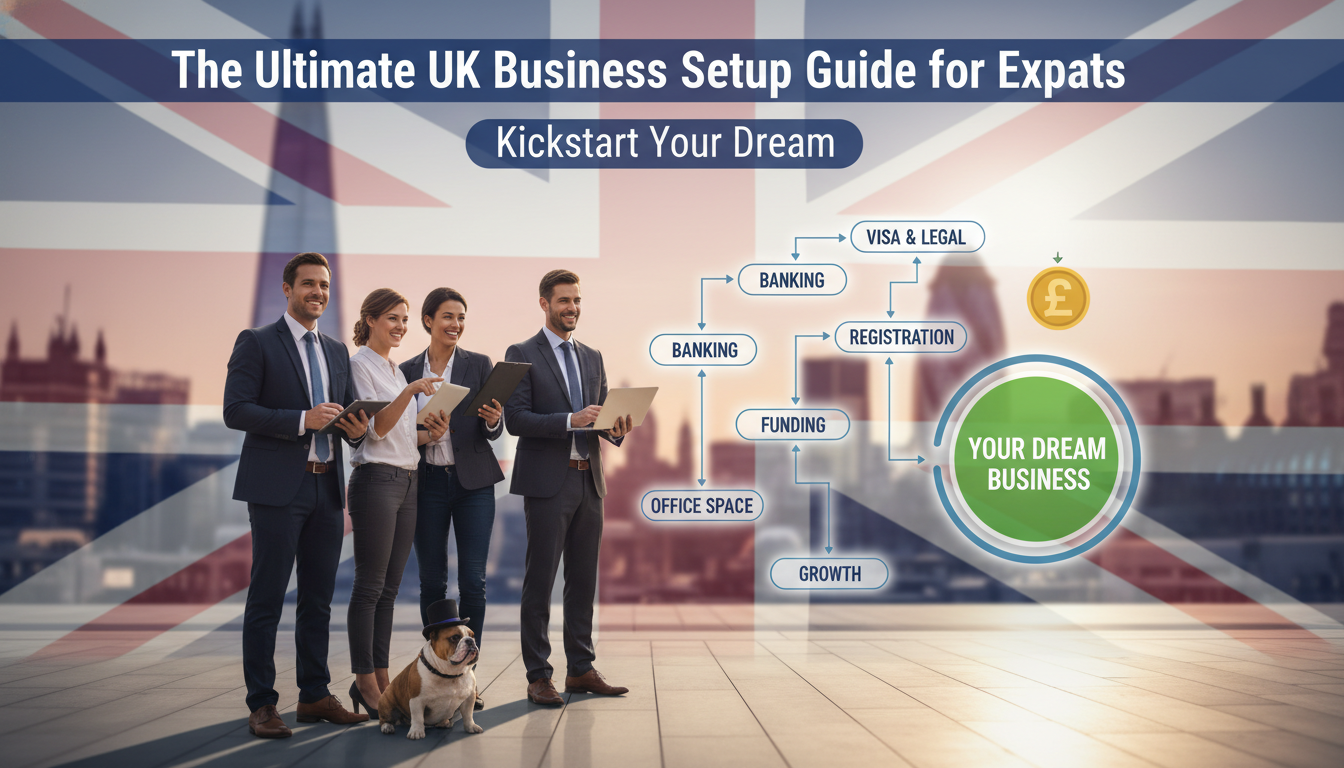
  • The Ultimate UK Business Setup Guide for Expats: Kickstart Your Dream

    The Ultimate UK Business Setup Guide for Expats: Kickstart Your Dream

    So, you’ve got a killer idea, a laptop, and a dream of conquering the British market? That is fantastic news! The UK is a global hub for innovation, finance, and creativity, making it a prime spot for international entrepreneurs. However, if you are new to the country, navigating the red tape can feel a bit like trying to understand cricket rules for the first time—confusing and slightly overwhelming.

    Don’t worry, though. We have got your back. Whether you are already living in London or planning your move from abroad, this UK business setup guide for expats is designed to walk you through every step of the process. Let’s turn that business plan into reality without the headache.

    Why the UK is Great for Expats

    Before we dive into the nitty-gritty, let’s look at why you are making the right choice. The UK ranks highly for ease of doing business. The time zone allows you to trade with Asia in the morning and the US in the afternoon. Plus, the startup ecosystem here is vibrant, diverse, and incredibly supportive.

    Your Step-by-Step UK Business Setup Guide for Expats

    Starting a business here is actually more straightforward than in many other European countries. You can often get registered within 24 hours! But as an expat, there are a few extra hurdles to jump over. Here is how to do it.

    1. Check Your Legal Status (Visas)

    This is the big one. Before you print business cards, you need to ensure you are legally allowed to run a business here. If you are already a resident with Indefinite Leave to Remain (ILR) or settled status, you are generally good to go.

    If you are coming from outside the UK specifically to start a company, you will likely need the Innovator Founder Visa. This replaced the old Start-up and Innovator visas. You will need an endorsement from an approved body showing your business idea is new, innovative, and scalable.

    2. Choose Your Business Structure

    In our UK business setup guide for expats, this is a critical decision point. You generally have three main options:

    • Sole Trader: You run the business as an individual. It’s simple, but you are personally liable for debts.

    • Limited Company (Ltd): The business is a separate legal entity. This is the most popular choice for expats because it limits your personal liability and can be more tax-efficient.

    • Partnership: Two or more people share the profits and risks.

    Most expats opt for a Limited Company because it looks more professional to clients and offers better protection.

    A photorealistic close-up shot of a diverse expat entrepreneur signing business documents on a rustic wooden desk in a bright, modern coffee shop in London, with a laptop open showing a UK government website and a cup of coffee nearby, soft focus background.

    3. Pick a Name and an Address

    You need a unique name. No copycats allowed! Check the Companies House register to ensure your chosen name isn’t taken. You will also need a registered UK office address. If you don’t have a physical office yet, don’t panic. Many accountants and virtual office services offer a registered address service for a small annual fee.

    4. Register with Companies House

    If you are going the Limited Company route, you must register with Companies House. You can do this online for a very small fee (usually £12). You will need to provide details about the directors and shareholders. This is usually the fastest part of this UK business setup guide for expats—you often get your certificate of incorporation the same day!

    5. Tackle the Taxes (HMRC)

    Once registered, the clock starts ticking on taxes. You need to register for Corporation Tax with HM Revenue and Customs (HMRC) within three months of starting to trade.

    • Corporation Tax: Paid on your company profits.

    • VAT: If your turnover exceeds £85,000, you must register for Value Added Tax (VAT). Many choose to register voluntarily before hitting this threshold to reclaim VAT on expenses.

    • PAYE: If you plan to hire employees (including yourself as a director taking a salary), you need to set up Pay As You Earn (PAYE).

    6. Open a UK Business Bank Account

    This can be the trickiest part for expats due to strict anti-money laundering laws. High street banks often require face-to-face meetings and proof of UK residency.

    Pro Tip: Look into digital-first challenger banks (like Monzo, Starling, or Revolut Business). They are often much friendlier to expats and faster to set up online compared to traditional legacy banks.

    7. Get Insured

    Depending on your industry, you might need:

    • Employers’ Liability Insurance: Mandatory if you hire staff.

    • Professional Indemnity Insurance: Vital if you provide advice or services.

    • Public Liability Insurance: Important if you deal with the public.

    Final Thoughts

    Launching a startup in a new country is an adventure. While the paperwork might seem daunting, following this UK business setup guide for expats breaks it down into manageable chunks. The UK appreciates entrepreneurial spirit, so once you get past the initial setup, you will find plenty of opportunities to grow and thrive. Good luck!

  • How to Open a Limited Company in UK as a Foreigner: A Simple Guide

    How to Open a Limited Company in UK as a Foreigner: A Simple Guide

    So, you have a brilliant business idea and you’ve set your sights on the British market. That is awesome! But then the doubt creeps in. You aren’t a resident, you don’t live in London, and you might not even have a visa. You are probably asking yourself: Can I really open a limited company in UK as a foreigner?

    The short answer? Absolutely, yes! The UK is one of the most business-friendly places on the planet, and they don’t discriminate based on where you live or what passport you hold. Whether you are a digital nomad in Bali or an entrepreneur in New York, setting up shop in the UK is surprisingly straightforward.

    In this guide, we will walk you through exactly how to open a limited company in UK as a foreigner without getting a headache from all the legal jargon. Let’s dive in!

    Can You Really Open a Limited Company in UK as a Foreigner?

    Let’s bust a myth right off the bat. You do not need to be a UK resident to be a director or shareholder of a UK company. In fact, thousands of non-residents open a limited company in UK as a foreigner every single year. The British government wants foreign investment, so they have kept the barriers to entry very low.

    You can do everything online, from the comfort of your couch. You don’t need to book a flight to Heathrow just to sign a piece of paper.

    What You Need to Get Started

    Before you rush off to register, you need to have your ducks in a row. Here is a checklist of the essentials you need to open a limited company in UK as a foreigner:

    • A Company Name: It must be unique and not offensive. You can check availability on the Companies House website.

    • At Least One Director: That is likely you. You must be 16 or older.

    • At Least One Shareholder: Again, this can be you. You can be the sole director and sole shareholder.

    • A Registered Office Address: This is the tricky part. You cannot use a PO Box. It must be a physical address in the UK. However, don’t worry—you don’t need to rent an expensive office. You can use a Virtual Office service or an accountant’s address to satisfy this requirement.

    • SIC Code: This is just a code that describes what your business does.

    A photorealistic close-up shot of a modern laptop on a wooden desk, displaying the UK Companies House website registration page. Beside the laptop, there is a cup of coffee and a passport, symbolizing international business. The lighting is warm and natural, suggesting a comfortable home office environment.

    The Step-by-Step Registration Process

    Ready to pull the trigger? Here is how the process actually looks when you decide to open a limited company in UK as a foreigner.

    1. Register with Companies House

    This is the official registrar of companies in the UK. You can register online for a fee of just £12 (correct as of writing). It usually takes about 24 hours to get approved. During this process, you will provide your details and your registered UK address.

    2. Prepare Your Documents

    You will need a Memorandum of Association and Articles of Association. If you register online, standard versions of these are created for you automatically. Easy peasy.

    3. Register for Corporation Tax

    Once your company is set up, you need to tell HMRC (Her Majesty’s Revenue and Customs) that you are active. You usually have three months to do this after starting business activities.

    The Banking Challenge

    While it is easy to open a limited company in UK as a foreigner, opening a traditional high-street business bank account (like with Barclays or HSBC) can be a nightmare if you aren’t physically present in the UK. They often require face-to-face meetings.

    The Solution: Fintech! Services like Wise (formerly TransferWise), Revolut Business, or Tide are lifesavers. They allow you to open a UK business bank account (sort code and account number included) completely online. This is usually the best route for non-residents.

    Do I Need a Visa?

    This is a common point of confusion. Owning a UK company does not automatically give you the right to live or work in the UK.

    • To Own the Company: No visa required.

    • To Live in the UK and Run It: You will likely need a visa (like the Innovator Founder visa).

    If you plan to run your business remotely from your home country, you generally do not need a UK visa.

    Final Thoughts

    Expanding your business globally doesn’t have to be scary. When you choose to open a limited company in UK as a foreigner, you gain credibility, access to a massive market, and a tax-efficient business structure. Just remember to get a solid UK registered address and look into fintech solutions for your banking needs. Good luck!

  • Dream Big in Britain: The Ultimate Expat Guide to Starting a Business in UK

    Dream Big in Britain: The Ultimate Expat Guide to Starting a Business in UK

    So, you’ve landed in Blighty, or perhaps you’re planning your big move across the pond, and you’ve got an itch to be your own boss. That’s fantastic! The United Kingdom is a hub for innovation, creativity, and commerce. However, navigating the bureaucratic maze in a new country can feel a bit like trying to understand cricket rules on your first day—confusing and slightly overwhelming.

    Don’t worry, grab a cuppa and settle in. This Expat guide to starting a business in UK is here to break it all down for you, keeping things simple, actionable, and hopefully, a little fun.

    1. Check Your Visa Status (The Important Stuff)

    Before you print your business cards, you need to ensure you are legally allowed to run a business here. Not all visas permit self-employment.

    If you are already in the UK on a standard work visa (Skilled Worker), you usually can’t be self-employed in a way that interferes with your sponsored job, although there are exceptions for supplementary work. If you are looking to come to the UK specifically to launch a startup, look into:

    • Innovator Founder Visa: For those with a unique business idea endorsed by an approved body.

    • Global Talent Visa: For leaders in academia, research, arts, or digital technology.

    2. Choose Your Business Structure

    Just like back home, you need to decide how you want to trade. In the UK, the three most common structures are:

    • Sole Trader: The easiest route. You and your business are the same legal entity. You keep all profits after tax, but you’re personally liable for debts.

    • Limited Company (Ltd): The most popular choice for serious startups. The business is a separate legal entity. It involves more paperwork, but it protects your personal assets.

    • Partnership: Similar to a sole trader, but you share the responsibility (and profits) with a partner.

    For this Expat guide to starting a business in UK, we generally recommend considering a Limited Company if you plan to scale, as it offers better protection and tax efficiency down the line.

    3. Registering Your Business

    If you go the Limited Company route, you need to register with Companies House. It costs as little as £12 if you do it online, and it’s surprisingly fast.

    You will need:

    • A unique company name (check the Companies House register to ensure it’s not taken).

    • An official UK address (this is public record).

    • At least one director and one shareholder.

    A modern, diverse group of young professionals brainstorming in a cozy London coffee shop with brick walls, a laptop open showing a Companies House registration page, rain softly hitting the window, warm lighting, photorealistic 8k.

    4. Taxes and The Tax Man (HMRC)

    Ah, the inevitable taxes. In the UK, the tax authority is called HMRC (Her Majesty’s Revenue and Customs). Once you start trading, you need to register for Corporation Tax (if you are a Ltd Company) or Self-Assessment (if you are a Sole Trader).

    Key things to remember:

    • VAT: If your turnover exceeds £85,000, you must register for VAT.

    • PAYE: If you hire employees, you need to set up a payroll system.

    5. Opening a Business Bank Account

    We won’t lie to you—this can be the trickiest part for expats. Traditional high street banks often require strict proof of address and credit history in the UK.

    However, the rise of fintech has been a lifesaver. Look into digital-first banks like Monzo, Starling, or Revolut Business. They are often much friendlier to new arrivals and allow you to set up accounts via an app in minutes.

    6. Business Insurance

    Depending on your trade, you might need insurance. If you hire staff, Employers’ Liability Insurance is a legal requirement. Professional Indemnity and Public Liability are also smart moves to protect your hard work.

    Final Thoughts

    Starting a venture in a new country is a brave move. It requires grit, patience, and a lot of tea. But with the right preparation and by following this Expat guide to starting a business in UK, you are setting yourself up for success. The UK market is diverse and welcoming to innovation—so go out there and make your mark!