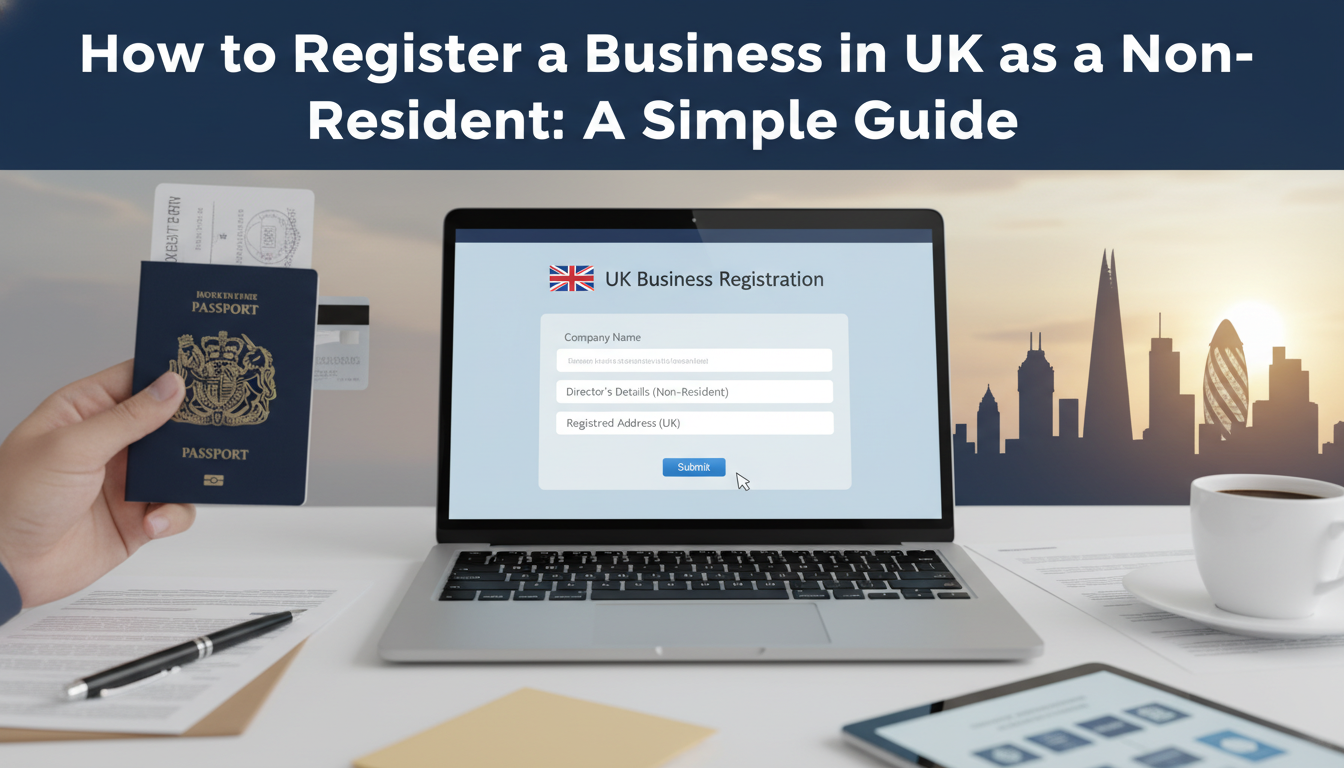
So, you’ve got a killer business idea, and you’re looking to go global. That is awesome! One of the best moves you can make is to register a business in UK as a non-resident. Why? Because the UK has a fantastic reputation, a solid legal system, and, believe it or not, it is incredibly easy to set up a company there—even if you live thousands of miles away.\n\nIn this guide, we are going to break down exactly how you can set up your Limited (LTD) company without getting a headache. We will keep it casual, simple, and straight to the point.\n\n## Why Bother with a UK Company?\n\nBefore we dive into the “how-to,” let’s quickly chat about the “why.” Choosing to register a business in UK as a non-resident comes with some pretty sweet perks:\n\n Credibility: Having a UK-registered company makes you look professional and trustworthy to clients worldwide.\n Low Corporate Tax: Compared to many other European countries, the UK tax rates are competitive.\n Ease of Setup: You don’t need to visit the UK to do it. Everything can be done online.\n\n## Can You Really Do It From Anywhere?\n\nShort answer: Yes!\n\nLong answer: Absolutely. The UK government wants foreign investment. You do not need to be a UK citizen, and you do not need to live in the UK. You just need to be at least 16 years old and not be an undischarged bankrupt. That’s pretty much it.\n\n## Step-by-Step: Register a Business in UK as a Non-Resident\n\nReady to get started? Here is your roadmap. The process is handled through Companies House, the official registrar of companies in the UK.\n\n### 1. Pick a Unique Name\n\nFirst things first, you need a name. It has to be unique and cannot be “too similar” to an existing one. You can use the Companies House name availability checker to see if your dream name is free. Keep it professional, but don’t be afraid to be creative!\n\n### 2. Get a Registered Office Address\n\nThis is the part that confuses people when they want to register a business in UK as a non-resident. Since you don’t live there, what address do you use?\n\nBy law, your company must have a registered office address in the UK (England, Wales, Scotland, or Northern Ireland). This address will be public record. Since you are overseas, you can’t use your home address.\n\nThe Solution: Use a Company Formation Agent or a Virtual Office service. For a small annual fee, they will lend you their London (or other UK city) address and scan/email any official mail to you. It’s cheap, efficient, and keeps your private life private.\n\n

\n\n### 3. Appoint Directors and Shareholders\n\nTo form a company, you need at least one director and one shareholder. The good news?\n\n You can be both.\n* You do not need to be a UK resident.\n\nYou will need to provide some personal details for the incorporation documents, but nothing too scary.\n\n### 4. Register with Companies House\n\nYou can do this directly on the government website, but most non-residents find it easier to use a formation agent. These agents offer packages that include the registered address (from step 2) and handle the paperwork for you.\n\nThe cost is usually very low (often between £50 to £100 for a basic package including the address). Once submitted, your company is usually approved within 24 hours.\n\n## The Banking Challenge\n\nOkay, let’s be real for a second. While it is easy to register a business in UK as a non-resident, opening a traditional high-street bank account (like Barclays or HSBC) without living there is tough. They usually require a face-to-face meeting.\n\nThe Fix: Go digital! Fintech banks like Wise (formerly TransferWise), Revolut Business, or Tide are lifesavers. They allow you to open a UK business bank account (with a sort code and account number) completely online. This is perfect for receiving payments in GBP.\n\n## Wrapping It Up\n\nSee? It’s not rocket science. Taking the leap to register a business in UK as a non-resident is a fantastic way to level up your entrepreneurial game. You get the prestige of a UK brand without the rainy weather (unless you like that sort of thing).\n\nJust remember to keep up with your annual filings and tax returns, and you are good to go. Good luck building your empire!
Leave a Reply